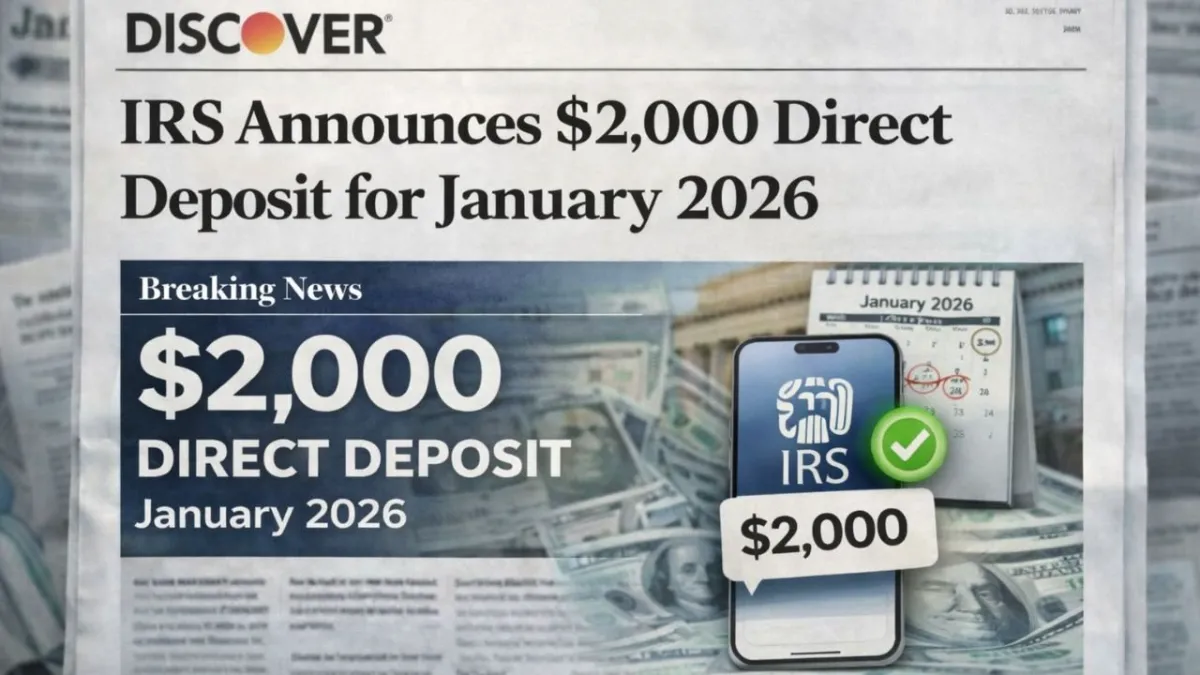
January 2026 $2,000 Direct Deposit Explained: As January 2026 begins, many Americans are hearing about a $2,000 direct deposit linked to the IRS. Reports say the payment is meant to help households deal with higher living costs after the holiday season. With food, rent, and utility prices remaining high, the idea of quick financial relief has naturally caught public attention.
At the same time, confusion has spread because not everyone understands what this payment represents. Some believe it is a guaranteed benefit for all citizens, while others are unsure if it is real at all. Understanding how this payment is described and who it may apply to is essential.
What the $2,000 Payment Is Said to Be
The $2,000 payment being discussed is described as a one-time relief deposit connected to IRS records. It is not described as a loan, and it is not an advance on a future tax refund. Instead, it is linked to income information already reported on recent tax returns.

According to available reports, the IRS would use tax data from either 2024 or 2025 filings to determine eligibility. This means the payment, if issued, would be based on existing records rather than a new application process.
How This Payment Is Different From a Tax Refund
A tax refund is money that taxpayers receive when they have paid more tax than they owed during the year. This proposed $2,000 payment is described differently. It is framed as temporary financial relief rather than a refund of overpaid taxes.
Because of this difference, the payment would not depend on how much tax someone paid. Instead, it would focus on income level and household details already on file with the IRS. That distinction has caused many people to misunderstand its purpose.

Who Is Expected to Qualify
Based on the information circulating, eligibility would depend mainly on income and residency status. Single filers earning up to $75,000 and married couples earning up to $150,000 are mentioned as qualifying groups. People above those limits may not receive the full amount.
Dependents listed on a tax return could increase the total payment. A valid Social Security number and U.S. residency for a significant portion of 2025 are also part of the described criteria.
When Payments Are Expected to Arrive
Reports suggest that payments would be sent in phases throughout January 2026. The earliest deposits are said to begin around mid-January, with additional rounds following shortly after. Direct deposit is described as the fastest delivery method.

People without bank information on file would reportedly receive paper checks later in the month. As with most federal payments, exact arrival dates would depend on bank processing times and mailing schedules.
How the Money Would Be Sent
Direct deposit is expected to be the primary method of payment. This allows funds to reach recipients quickly and reduces the chance of delays. Anyone with updated banking information on file would benefit from faster delivery.
If bank details are missing or outdated, the IRS would reportedly mail a paper check. This process usually takes longer, which is why updating information in advance is often encouraged.

Do You Need to Take Any Action
Most people would not need to take special action if their tax information is current. The IRS would rely on existing records to determine eligibility and issue payments automatically.
However, individuals who changed bank accounts, moved recently, or do not normally file taxes may need to update their information. Non-filers are often advised to use IRS portals to ensure accurate delivery details.
Why There Is So Much Confusion
Much of the confusion comes from online headlines and social media posts that present the $2,000 payment as guaranteed. In reality, federal payments are usually based on detailed eligibility checks and official authorization.
यह भी पढ़े:
 IRS Confirms $2,000 Direct Deposit for January, 2026 – New Payment Dates and Eligibility Guide
Another reason for confusion is timing. January is also when tax season begins, so refunds, credits, and other deposits often arrive around the same time. This overlap can make different payments look like a single program.
What to Do If You Expect a Payment
Anyone expecting a federal payment should rely only on official IRS communication. Checking your IRS online account is the safest way to confirm whether a payment is scheduled or pending.
Avoid responding to calls, texts, or emails claiming to help you “release” your $2,000 payment. The IRS does not request sensitive information through unsolicited contact, and scams often increase during periods of public confusion.

Final Thoughts
The idea of a $2,000 IRS direct deposit in January 2026 has generated strong interest because many families are under financial pressure. While reports describe eligibility rules and payment timelines, individuals should remain cautious and informed.
Understanding how federal payments work helps prevent disappointment and protects against misinformation. Official IRS updates are always the most reliable source when it comes to payments, refunds, or relief programs.
Disclaimer
This article is for informational purposes only and does not provide legal, tax, or financial advice. Payment programs, eligibility rules, and timelines depend on official government authorization and may change. Readers should rely on official IRS announcements or consult a qualified professional before making financial decisions.